

Best Smartwatches 2025: Apple Watch Series 11 vs Ultra 3 vs Pixel Watch 4 vs Galaxy Watch 8 vs Garmin Venu 4 vs OnePlus Watch 3 vs Huawei Watch GT 6 Pro
Seven 2025 smartwatches compared on battery, display, build, fitness tools and phone compatibility. The Apple Watch Ultra 3 has the top rating, the Garmin Venu 4 has the longest rated battery, the Huawei GT 6 Pro has the toughest build, and the Pixel Watch 4 suits Android-based runners.
| Product | Price | Rating | Best for |
|---|---|---|---|
| Apple Watch Series 11 | £369.00 | 4.0 / 5 | Lightest watch listed in this group (30.3–37.8g) |
| Apple Watch Ultra 3 | $799.00 | 4.2 / 5 | Highest-rated watch in this comparison (4.2) |
| Google Pixel Watch 4 Review | — | 4.0 / 5 | Fastest charging in the group (50% in about 15 min) |
| Samsung Galaxy Watch 8 | — | 3.8 / 5 | Slimmest listed watch at 8.6mm |
| Garmin Venu 4 | — | 3.5 / 5 | Longest rated battery here (up to 12 days) |
| OnePlus Watch 3 | — | 4.0 / 5 | Best battery among the Wear OS-style watches (98 hrs) |
| Huawei Watch GT 6 Pro | — | 4.0 / 5 | Largest listed battery capacity (867mAh) |
| Watch | Rating | Price | Display | Battery | Build | Standout | Biggest drawback |
|---|---|---|---|---|---|---|---|
| Apple Watch Series 11 | 4.0 | £369 | 416x496 (46mm) | Around two days including sleep tracking | Aluminium, Ion-X glass, 9.7mm, 30.3–37.8g | Hypertension notifications, sleep score | Same S10 chip as before; no dual-band GPS |
| Apple Watch Ultra 3 | 4.2 | $799 | LTPO3, largest Apple Watch display | 42 hrs advertised (around three days real-world) | Titanium, sapphire, 61.8g | Satellite SOS and messaging | Premium price; iPhone only |
| Google Pixel Watch 4 | 4.0 | Not listed | 1.4in AMOLED, 3,000 nits | 455mAh; 50% charge in about 15 min | Gorilla Glass 5 | Dual-frequency GPS, fast charging | Android only; Fitbit subscription |
| Samsung Galaxy Watch 8 | 3.8 | Not listed | 1.5in, 3,000 nits | Considered short | 8.6mm thick, raised glass | Gemini on the wrist, LTE option | Short battery; fragile screen |
| Garmin Venu 4 | 3.5 | Not listed | AMOLED, 1.2in or 1.4in | Up to 12 days (smartwatch); 17 hrs GPS | Stainless steel, 56g (45mm) | Built-in flashlight | Breadcrumb-only maps |
| OnePlus Watch 3 | 4.0 | Not listed | 1.5in AMOLED | 631mAh; 98 hrs (PCMag) | Titanium bezel | Dual-chip efficiency, rotating crown | No LTE; ECG restricted |
| Huawei Watch GT 6 Pro | 4.0 | Not listed | 1.47in AMOLED, 466x466, 3,000 nits | 867mAh; long life | Titanium alloy, sapphire, ceramic, 11.25mm | 40m dive-proof, dual-band GNSS, Android and iOS | Limited app features; no UK NFC payments |
Ratings and price: the Ultra 3 leads
The Apple Watch Ultra 3 has the highest score in this group at 4.2. It is also the most expensive watch here with a listed price, at $799. Four watches share the next spot on 4.0: the Apple Watch Series 11, Pixel Watch 4, OnePlus Watch 3 and Huawei Watch GT 6 Pro. The Galaxy Watch 8 (3.8) and Garmin Venu 4 (3.5) come last.
On price, the Series 11 costs £369 and the Ultra 3 costs $799. Prices for the other five were not supplied. The Series 11 gets you the same S10 chip as the Ultra 3 for far less money. What you give up is the Ultra's titanium and sapphire build, satellite messaging and longer battery.
Battery life: Garmin leads on paper, Samsung trails
The Garmin Venu 4 has the longest rated figure here, up to 12 days in smartwatch mode on the 45mm model, plus 17 hours of GPS. Its review does note that battery life has dropped compared with the Venu 3. Among the Wear OS-style watches, the OnePlus Watch 3 stands out. Reviewers call its battery class-leading for Wear OS, and PCMag measured 98 hours, thanks to its dual-chip design. The Huawei GT 6 Pro has the largest listed battery capacity (867mAh), and reviewers consistently praise its endurance.
Among the Apple watches, the Ultra 3 clearly beats the Series 11: around three days of real-world use against around two. The Pixel Watch 4 has the smallest listed battery (455mAh), but it charges fastest, reaching 50% in about 15 minutes. The Galaxy Watch 8 comes last, with battery life still described as short.
Display and build: Huawei and the Ultra 3 are the toughest
Three watches have 3,000-nit peak brightness: the Pixel Watch 4, Galaxy Watch 8 and Huawei GT 6 Pro. That makes them the strongest choices for reading outdoors. The Ultra 3 counters with the largest display Apple has fitted to a watch.
For durability, the Huawei GT 6 Pro and Ultra 3 are the only two with sapphire glass, and both use titanium. The Huawei adds a ceramic back, IP69 protection and a 40m dive rating. The Series 11 uses Ion-X glass, which is twice as scratch resistant as before. That still sits a step below sapphire, but ahead of the Pixel's Gorilla Glass 5 and the Galaxy Watch 8's raised glass, which is reportedly easy to damage.
On size and weight, the Galaxy Watch 8 is the slimmest listed at 8.6mm, against 9.7mm for the Series 11 and 11.25mm for the Huawei. The Series 11 is the lightest listed (30.3g to 37.8g). The Ultra 3 (61.8g) and Venu 4 (56g) are the heaviest.
Fitness and outdoor use: Pixel and Huawei lead on GPS
Serious runners should note that the Series 11 has neither dual-band GPS nor a dedicated lap button. The Pixel Watch 4 (dual-frequency GPS) and Huawei GT 6 Pro (dual-band L1+L5 GNSS) both beat it on tracking hardware. The Huawei also has the broadest listed sensor set, including a barometer, skin temperature, ECG and a depth sensor.
The Garmin Venu 4 adds a handy flashlight, but it offers only breadcrumb navigation, not full-colour maps. The OnePlus Watch 3 improves its GPS over the previous model. However, it has no ANT+ or Bluetooth heart rate broadcasting, and ECG is disabled in the US and reportedly unsupported in the UK. For safety off the grid, the Ultra 3 is unique here with satellite SOS and messaging.
Smart features and phone compatibility
Compatibility will narrow the choice for many buyers. The Ultra 3 works only with an iPhone 11 or newer. The Pixel Watch 4 works only with Android, and full coaching and AI features need a Fitbit subscription. The Huawei GT 6 Pro is the only watch here explicitly listed as working with both Android 9+ and iOS 13+. The trade-off is that it has fewer core smartwatch features than app-rich rivals, NFC payments don't work in the UK, and reviewers report frustrations with its phone connection.
The Galaxy Watch 8 puts Google Gemini on your wrist and is the only non-Apple watch here with a listed 4G option. The OnePlus Watch 3 has no reported LTE. For health features, the Series 11 adds hypertension notifications and a sleep score.
Verdict: which smartwatch should you buy?
- Best overall for iPhone adventurers: the Apple Watch Ultra 3. It has the top rating, satellite messaging, sapphire and titanium, and around three days of battery, if you can justify $799.
- Best value for iPhone users: the Apple Watch Series 11. At £369 it is the lightest watch here, with around two days of battery and new health features. Runners may miss dual-band GPS.
- Best for Android-based runners: the Pixel Watch 4. It has dual-frequency GPS, a 3,000-nit screen and the fastest charging.
- Best Wear OS battery: the OnePlus Watch 3, provided you don't need LTE or ECG.
- Most rugged, works with both platforms: the Huawei Watch GT 6 Pro. It has sapphire, titanium, 40m dive-proofing and long battery life, but limited apps.
- Best for Samsung and Gemini fans: the Galaxy Watch 8, the slimmest watch here and one with an LTE option, but it has the weakest battery.
- Longest rated battery: the Garmin Venu 4, though it has the lowest score in this group.

Apple Watch Series 11
Pros
- + Lightest watch listed in this group (30.3–37.8g)
- + Same S10 chip as the Ultra 3 for £369
- + Ion-X glass is tougher than the Pixel's Gorilla Glass 5
Cons
- − No dual-band GPS, unlike the Pixel Watch 4 and Huawei GT 6 Pro
- − Around two days of battery trails the Ultra 3, OnePlus and Garmin
- − No sapphire, unlike the Ultra 3 and Huawei
Apple Watch Ultra 3
Pros
- + Highest-rated watch in this comparison (4.2)
- + Only watch here with satellite SOS and messaging
- + Sapphire and titanium match the Huawei for toughness
Cons
- − Most expensive listed price at $799
- − Heaviest listed watch (61.8g)
- − iPhone only, while the Huawei also works with Android
Google Pixel Watch 4 Review
Pros
- + Fastest charging in the group (50% in about 15 min)
- + Dual-frequency GPS beats the Series 11 for runners
- + 3,000-nit display matches the brightest here
Cons
- − Smallest listed battery capacity (455mAh)
- − Gorilla Glass 5 lags behind the sapphire on the Ultra 3 and Huawei
- − Only watch here needing a subscription (Fitbit) for full features
Samsung Galaxy Watch 8
Pros
- + Slimmest listed watch at 8.6mm
- + Gemini assistant on the wrist, unique in this group
- + Offers a 4G option, which OnePlus lacks
Cons
- − Weakest battery reputation in the group
- − Raised glass more fragile than Ultra 3 or Huawei sapphire
- − Second-lowest rating here (3.8)
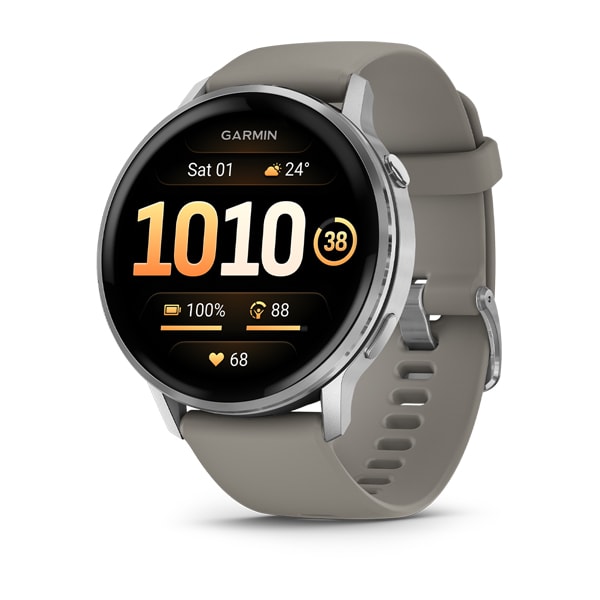
Garmin Venu 4
Pros
- + Longest rated battery here (up to 12 days)
- + Built-in flashlight no rival offers
- + Stainless steel case feels premium
Cons
- − Lowest rating in this comparison (3.5)
- − Breadcrumb-only maps
- − Second-heaviest listed (56g)
OnePlus Watch 3
Pros
- + Best battery among the Wear OS-style watches (98 hrs)
- + Dual-chip design is unique in this group
- + Titanium bezel adds a premium touch
Cons
- − No LTE, unlike the Galaxy Watch 8
- − ECG restricted, while the Huawei includes it
- − No heart rate broadcasting
Huawei Watch GT 6 Pro
Pros
- + Largest listed battery capacity (867mAh)
- + Toughest build: sapphire, titanium, IP69, 40m dive
- + Only watch here listed for both Android and iOS
Cons
- − Fewer smart features than app-rich rivals
- − No UK NFC payments
- − Thickest listed case at 11.25mm